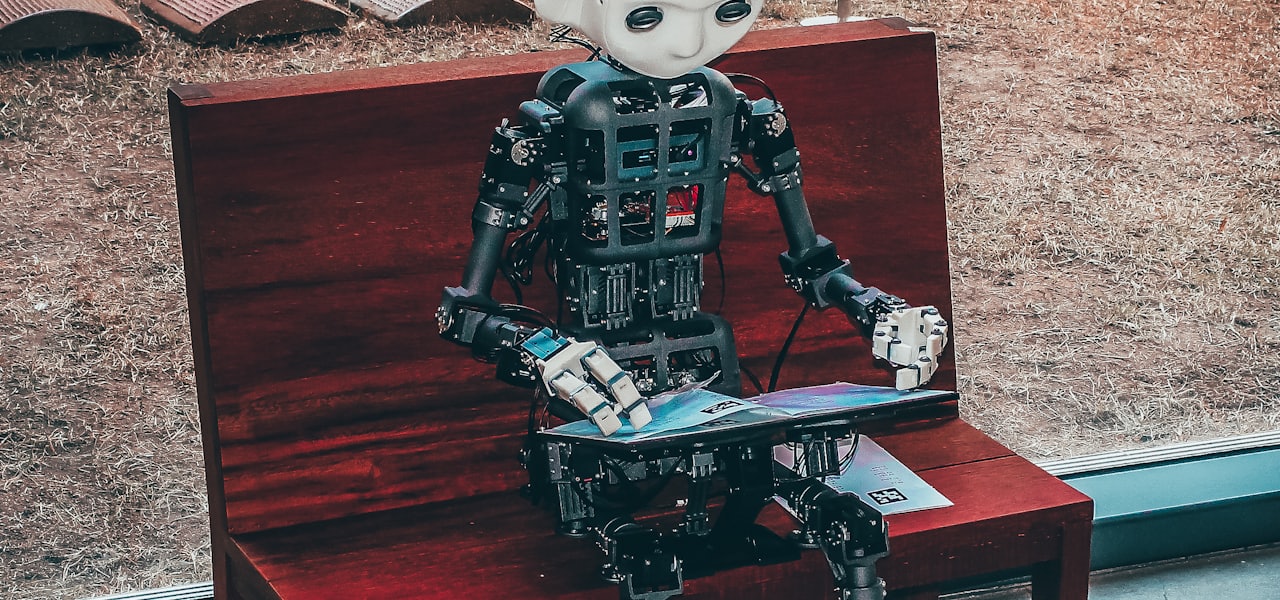
Natural-language user interface (LUI or NLUI) is a type of computer human interface where linguistic phenomena such as verbs, phrases and clauses act as UI controls for creating, selecting and modifying data in software applications. Chatbots are a common implementation of natural-language interfaces, enabling users to interact with software through conversational text or speech. In interface design, natural-language interfaces are sought after for their speed and ease of use, but most suffer the challenges to understanding wide varieties of ambiguous input. Natural-language interfaces are an active area of study in the field of natural-language processing and computational linguistics. An intuitive general natural-language interface is one of the active goals of the Semantic Web. Text interfaces are "natural" to varying degrees. Many formal (un-natural) programming languages incorporate idioms of natural human language. Likewise, a traditional keyword search engine could be described as a "shallow" natural-language user interface. == Overview == A natural-language search engine would in theory find targeted answers to user questions (as opposed to keyword search). For example, when confronted with a question of the form 'which U.S. state has the highest income tax?', conventional search engines ignore the question and instead search on the keywords 'state', 'income' and 'tax'. Natural-language search, on the other hand, attempts to use natural-language processing to understand the nature of the question and then to search and return a subset of the web that contains the answer to the question. If it works, results would have a higher relevance than results from a keyword search engine, due to the question being included. == History == Prototype Nl interfaces had already appeared in the late sixties and early seventies. SHRDLU, a natural-language interface that manipulates blocks in a virtual "blocks world" Lunar, a natural-language interface to a database containing chemical analyses of Apollo 11 Moon rocks by William A. Woods. Chat-80 transformed English questions into Prolog expressions, which were evaluated against the Prolog database. The code of Chat-80 was circulated widely, and formed the basis of several other experimental Nl interfaces. An online demo is available on the LPA website. ELIZA, written at MIT by Joseph Weizenbaum between 1964 and 1966, mimicked a psychotherapist and was operated by processing users' responses to scripts. Using almost no information about human thought or emotion, the DOCTOR script sometimes provided a startlingly human-like interaction. An online demo is available on the LPA website. Janus is also one of the few systems to support temporal questions. Intellect from Trinzic (formed by the merger of AICorp and Aion). BBN's Parlance built on experience from the development of the Rus and Irus systems. IBM Languageaccess Q&A from Symantec. Datatalker from Natural Language Inc. Loqui from BIM Systems. English Wizard from Linguistic Technology Corporation. == Challenges == Natural-language interfaces have in the past led users to anthropomorphize the computer, or at least to attribute more intelligence to machines than is warranted. On the part of the user, this has led to unrealistic expectations of the capabilities of the system. Such expectations will make it difficult to learn the restrictions of the system if users attribute too much capability to it, and will ultimately lead to disappointment when the system fails to perform as expected as was the case in the AI winter of the 1970s and 80s. A 1995 paper titled 'Natural Language Interfaces to Databases – An Introduction', describes some challenges: Modifier attachment The request "List all employees in the company with a driving licence" is ambiguous unless you know that companies can't have driving licences. Conjunction and disjunction "List all applicants who live in California and Arizona" is ambiguous unless you know that a person can't live in two places at once. Anaphora resolution resolve what a user means by 'he', 'she' or 'it', in a self-referential query. Other goals to consider more generally are the speed and efficiency of the interface, in all algorithms these two points are the main point that will determine if some methods are better than others and therefore have greater success in the market. In addition, localisation across multiple language sites requires extra consideration - this is based on differing sentence structure and language syntax variations between most languages. Finally, regarding the methods used, the main problem to be solved is creating a general algorithm that can recognize the entire spectrum of different voices, while disregarding nationality, gender or age. The significant differences between the extracted features - even from speakers who says the same word or phrase - must be successfully overcome. == Uses and applications == The natural-language interface gives rise to technology used for many different applications. Some of the main uses are: Dictation, is the most common use for automated speech recognition (ASR) systems today. This includes medical transcriptions, legal and business dictation, and general word processing. In some cases special vocabularies are used to increase the accuracy of the system. Command and control, ASR systems that are designed to perform functions and actions on the system are defined as command and control systems. Utterances like "Open Netscape" and "Start a new xterm" will do just that. Telephony, some PBX/Voice Mail systems allow callers to speak commands instead of pressing buttons to send specific tones. Wearables, because inputs are limited for wearable devices, speaking is a natural possibility. Medical, disabilities, many people have difficulty typing due to physical limitations such as repetitive strain injuries (RSI), muscular dystrophy, and many others. For example, people with difficulty hearing could use a system connected to their telephone to convert a caller's speech to text. Embedded applications, some new cellular phones include C&C speech recognition that allow utterances such as "call home". This may be a major factor in the future of automatic speech recognition and Linux. Below are named and defined some of the applications that use natural-language recognition, and so have integrated utilities listed above. === Ubiquity === Ubiquity, an add-on for Mozilla Firefox, is a collection of quick and easy natural-language-derived commands that act as mashups of web services, thus allowing users to get information and relate it to current and other webpages. === Wolfram Alpha === Wolfram Alpha is an online service that answers factual queries directly by computing the answer from structured data, rather than providing a list of documents or web pages that might contain the answer as a search engine would. It was announced in March 2009 by Stephen Wolfram, and was released to the public on May 15, 2009. === Siri === Siri is an intelligent personal assistant application integrated with operating system iOS. The application uses natural language processing to answer questions and make recommendations. Siri's marketing claims include that it adapts to a user's individual preferences over time and personalizes results, and performs tasks such as making dinner reservations while trying to catch a cab. === Others === Ask.com – The original idea behind Ask Jeeves (Ask.com) was traditional keyword searching with an ability to get answers to questions posed in everyday, natural language. The current Ask.com still supports this, with added support for math, dictionary, and conversion questions. Braina – Braina is a natural language interface for Windows OS that allows to type or speak English language sentences to perform a certain action or find information. GNOME Do – Allows for quick finding miscellaneous artifacts of GNOME environment (applications, Evolution and Pidgin contacts, Firefox bookmarks, Rhythmbox artists and albums, and so on) and execute the basic actions on them (launch, open, email, chat, play, etc.). hakia – hakia was an Internet search engine. The company invented an alternative new infrastructure to indexing that used SemanticRank algorithm, a solution mix from the disciplines of ontological semantics, fuzzy logic, computational linguistics, and mathematics. hakia closed in 2014. Lexxe – Lexxe was an Internet search engine that used natural-language processing for queries (semantic search). Searches could be made with keywords, phrases, and questions, such as "How old is Wikipedia?" Lexxe closed its search engine services in 2015. Pikimal – Pikimal used natural-language tied to user preference to make search recommendations by template. Pikimal closed in 2015. Powerset – On May 11, 2008, the company unveiled a tool for searching a fixed subset of Wikipedia using conversational phrases rather than keywords. On July 1, 2008, it was purchased by
Random (software)
Random was an iOS mobile app that used algorithms and human-curation to create an adaptive interface to the Internet. The app served a remix of relevance and serendipity that allowed people to find diverse topics and interesting content that they might not have encountered otherwise. Random did not require a login or sign-up - the use of the app was anonymous. The app was powered by an artificial intelligence that learned from direct and indirect user interactions inside the app. While learning and adapting to a person, Random created a unique anonymous choice profile that was then used for recommending topics and content. The app didn't recommend the same content twice. == User interface == Random's user interface was made of ever-changing topic blocks that contained keywords and images. By choosing any of the blocks, the user would see related web content. By closing the web content, the user could access new related topics. The user interface allowed people to get more information about a specific topic area or then just leap freely from topic to topic. The content recommended by Random could be any type of web content, varying from news articles to long-form stories and from photographs to videos. Every user of the Random was curating content for other users by using the app. == History == Random was launched in March 2014. The startup was backed by Skype co-founder Janus Friis. The Random app received a strong reception from the likes of The New York Times, TechCrunch, New Scientist, Vice, and other leading publications. The app went on to gain traction with an active and loyal user community of several hundreds of thousands. This was not enough to support the free app model the team strongly believed in, and the service was terminated in December 2015. == Reception == Various reviews in media have emphasized that Random enables people to break their filter bubble and find diverse content they might not find elsewhere. Alan Henry of Lifehacker wrote: "Random... breaks you out by intentionally guiding you to new topics and interesting articles at sites you may not otherwise read." Vice Motherboard's Claire Evans says that: "Random never turns into a filter bubble, because it perpetually injects the irrational into my experience… in a cocktail of relevancy and serendipity." The app has been said to have a unique, minimalistic user experience. Kit Eaton of The New York Times commented that Random "let's you browse the news in a different way to all the other news sites you've probably ever used." Mashable reviewed Random by concluding that the "app may be one of the most simple content-discovery apps on the market."
Hyperparameter (machine learning)
In machine learning, a hyperparameter is a parameter that can be set in order to define any configurable part of a model's learning process. Hyperparameters can be classified as either model hyperparameters (such as the topology and size of a neural network) or algorithm hyperparameters (such as the learning rate and the batch size of an optimizer). These are named hyperparameters in contrast to parameters, which are characteristics that the model learns from the data. Hyperparameters are not required by every model or algorithm. Some simple algorithms such as ordinary least squares regression require none. However, the LASSO algorithm, for example, adds a regularization hyperparameter to ordinary least squares which must be set before training. Even models and algorithms without a strict requirement to define hyperparameters may not produce meaningful results if these are not carefully chosen. However, optimal values for hyperparameters are not always easy to predict. Some hyperparameters may have no meaningful effect, or one important variable may be conditional upon the value of another. Often a separate process of hyperparameter tuning is needed to find a suitable combination for the data and task. As well as improving model performance, hyperparameters can be used by researchers to introduce robustness and reproducibility into their work, especially if it uses models that incorporate random number generation. == Considerations == The time required to train and test a model can depend upon the choice of its hyperparameters. A hyperparameter is usually of continuous or integer type, leading to mixed-type optimization problems. The existence of some hyperparameters is conditional upon the value of others, e.g. the size of each hidden layer in a neural network can be conditional upon the number of layers. === Difficulty-learnable parameters === The objective function is typically non-differentiable with respect to hyperparameters. As a result, in most instances, hyperparameters cannot be learned using gradient-based optimization methods (such as gradient descent), which are commonly employed to learn model parameters. These hyperparameters are those parameters describing a model representation that cannot be learned by common optimization methods, but nonetheless affect the loss function. An example would be the tolerance hyperparameter for errors in support vector machines. === Untrainable parameters === Sometimes, hyperparameters cannot be learned from the training data because they aggressively increase the capacity of a model and can push the loss function to an undesired minimum (overfitting to the data), as opposed to correctly mapping the richness of the structure in the data. For example, if we treat the degree of a polynomial equation fitting a regression model as a trainable parameter, the degree would increase until the model perfectly fit the data, yielding low training error, but poor generalization performance. === Tunability === Most performance variation can be attributed to just a few hyperparameters. The tunability of an algorithm, hyperparameter, or interacting hyperparameters is a measure of how much performance can be gained by tuning it. For an LSTM, while the learning rate followed by the network size are its most crucial hyperparameters, batching and momentum have no significant effect on its performance. Although some research has advocated the use of mini-batch sizes in the thousands, other work has found the best performance with mini-batch sizes between 2 and 32. === Robustness === An inherent stochasticity in learning directly implies that the empirical hyperparameter performance is not necessarily its true performance. Methods that are not robust to simple changes in hyperparameters, random seeds, or even different implementations of the same algorithm cannot be integrated into mission critical control systems without significant simplification and robustification. Reinforcement learning algorithms, in particular, require measuring their performance over a large number of random seeds, and also measuring their sensitivity to choices of hyperparameters. Their evaluation with a small number of random seeds does not capture performance adequately due to high variance. Some reinforcement learning methods, e.g. DDPG (Deep Deterministic Policy Gradient), are more sensitive to hyperparameter choices than others. == Optimization == Hyperparameter optimization finds a tuple of hyperparameters that yields an optimal model which minimizes a predefined loss function on given test data. The objective function takes a tuple of hyperparameters and returns the associated loss. Typically these methods are not gradient based, and instead apply concepts from derivative-free optimization or black box optimization. == Reproducibility == Apart from tuning hyperparameters, machine learning involves storing and organizing the parameters and results, and making sure they are reproducible. In the absence of a robust infrastructure for this purpose, research code often evolves quickly and compromises essential aspects like bookkeeping and reproducibility. Online collaboration platforms for machine learning go further by allowing scientists to automatically share, organize and discuss experiments, data, and algorithms. Reproducibility can be particularly difficult for deep learning models. For example, research has shown that deep learning models depend very heavily even on the random seed selection of the random number generator.
Moral outsourcing
Moral outsourcing is the placing of responsibility for ethical decision-making onto external entities, often algorithms. The term is often used in discussions of computer science and algorithmic fairness, but it can apply to any situation in which one appeals to outside agents in order to absolve themselves of responsibility for their actions. In this context, moral outsourcing specifically refers to the tendency of society to blame technology, rather than its creators or users, for any harm it may cause. == Definition == The term "moral outsourcing" was first coined by Dr. Rumman Chowdhury, a data scientist concerned with the overlap between artificial intelligence and social issues. Chowdhury used the term to describe looming fears of a so-called “Fourth Industrial Revolution” following the rise of artificial intelligence. Moral outsourcing is often applied by technologists to shrink away from their part in building offensive products. In her TED Talk, Chowdhury gives the example of a creator excusing their work by saying they were simply doing their job. This is a case of moral outsourcing and not taking ownership for the consequences of creation. When it comes to AI, moral outsourcing allows for creators to decide when the machine is human and when it is a computer - shifting the blame and responsibility of moral plights off of the technologists and onto the technology. Conversations around AI and bias and its impacts require accountability to bring change. It is difficult to address these biased systems if their creators use moral outsourcing to avoid taking any responsibility for the issue. One example of moral outsourcing is the anger that is directed at machines for “taking jobs away from humans” rather than companies for employing that technology and jeopardizing jobs in the first place. The term "moral outsourcing" refers to the concept of outsourcing, or enlisting an external operation to complete specific work for another organization. In the case of moral outsourcing, the work of resolving moral dilemmas or making choices according to an ethical code is supposed to be conducted by another entity. == Real-world applications == In the medical field, AI is increasingly involved in decision-making processes about which patients to treat, and how to treat them. The responsibility of the doctor to make informed decisions about what is best for their patients is outsourced to an algorithm. Sympathy is also noted to be an important part of medical practice; an aspect that artificial intelligence, glaringly, is missing. This form of moral outsourcing is a major concern in the medical community. Another field of technology in which moral outsourcing is frequently brought up is autonomous vehicles. California Polytechnic State University professor Keith Abney proposed an example scenario: "Suppose we have some [troublemaking] teenagers, and they see an autonomous vehicle, they drive right at it. They know the autonomous vehicle will swerve off the road and go off a cliff, but should it?" The decision of whether to sacrifice the autonomous vehicle (and any passengers inside) or the vehicle coming at it will be written into the algorithms defining the car's behavior. In the case of moral outsourcing, the responsibility of any damage caused by an accident may be attributed to the autonomous vehicle itself, rather than the creators who wrote the protocol the vehicle will use to "decide" what to do. Moral outsourcing is also used to delegate the consequences of predictive policing algorithms to technology, rather than the creators or the police. There are many ethical concerns with predictive policing due to the fact that it results in the over-policing of low income and minority communities. In the context of moral outsourcing, the positive feedback loop of sending disproportionate police forces into minority communities is attributed to the algorithm and the data being fed into this system--rather than the users and creators of the predictive policing technology. == Outside of technology == === Religion === Moral outsourcing is also commonly seen in appeals to religion to justify discrimination or harm. In his book What It Means to be Moral, sociologist Phil Zuckerman contradicts the popular religious notion that morality comes from God. Religion is oftentimes cited as a foundation for a moral stance without any tangible relation between the religious beliefs and personal stance. In these cases, religious individuals will "outsource" their personal beliefs and opinions by claiming that they are a result of their religious identification. This is seen where religion is cited as a factor for political beliefs, medical beliefs, and in extreme cases an excuse for violence. === Manufacturing === Moral outsourcing can also be seen in the business world in terms of manufacturing goods and avoiding environmental responsibility. Some companies in the United States will move their production process to foreign countries with more relaxed environmental policies to avoid the pollution laws that exist in the US. A study by the Harvard Business Review found that "in countries with tight environmental regulation, companies have 29% lower domestic emissions on average. On the other hand, such a tightening in regulation results in 43% higher emissions abroad." The consequences of higher pollution rates are then attributed to the loose regulations in these countries, rather than on the companies themselves who purposefully moved into these areas to avoid strict pollution policy.
Intelligent decision support system
An intelligent decision support system (IDSS) is a decision support system that makes extensive use of artificial intelligence (AI) techniques. Use of AI techniques in management information systems has a long history – indeed terms such as "Knowledge-based systems" (KBS) and "intelligent systems" have been used since the early 1980s to describe components of management systems, but the term "Intelligent decision support system" is thought to originate with Clyde Holsapple and Andrew Whinston in the late 1970s. Examples of specialized intelligent decision support systems include Flexible manufacturing systems (FMS), intelligent marketing decision support systems and medical diagnosis systems. Ideally, an intelligent decision support system should behave like a human consultant: supporting decision makers by gathering and analysing evidence, identifying and diagnosing problems, proposing possible courses of action and evaluating such proposed actions. The aim of the AI techniques embedded in an intelligent decision support system is to enable these tasks to be performed by a computer, while emulating human capabilities as closely as possible. Many IDSS implementations are based on expert systems, a well established type of KBS that encode knowledge and emulate the cognitive behaviours of human experts using predicate logic rules, and have been shown to perform better than the original human experts in some circumstances. Expert systems emerged as practical applications in the 1980s based on research in artificial intelligence performed during the late 1960s and early 1970s. They typically combine knowledge of a particular application domain with an inference capability to enable the system to propose decisions or diagnoses. Accuracy and consistency can be comparable to (or even exceed) that of human experts when the decision parameters are well known (e.g. if a common disease is being diagnosed), but performance can be poor when novel or uncertain circumstances arise. Research in AI focused on enabling systems to respond to novelty and uncertainty in more flexible ways is starting to be used in IDSS. For example, intelligent agents that perform complex cognitive tasks without any need for human intervention have been used in a range of decision support applications. Capabilities of these intelligent agents include knowledge sharing, machine learning, data mining, and automated inference. A range of AI techniques such as case based reasoning, rough sets and fuzzy logic have also been used to enable decision support systems to perform better in uncertain conditions. A 2009 research about a multi-artificial system intelligence system named IILS is proposed to automate problem-solving processes within the logistics industry. The system involves integrating intelligence modules based on case-based reasoning, multi-agent systems, fuzzy logic, and artificial neural networks aiming to offer advanced logistics solutions and support in making well-informed, high-quality decisions to address a wide range of customer needs and challenges.
SQLBuddy
SQL Buddy is an open-source web-based application primarily coded in PHP, that allows users to control both MySQL and SQLite database through a web browser. The project was well regarded for its easy installation process and the friendly user interface it offered. The application was further praised for its cross-platform compatibility, meaning users could manage their databases on various operating systems, including Linux, Windows, and macOS. The development of SQL Buddy has stopped, with version 1.3.3 being the final release on January 18, 2011. No further releases are expected.
Time series
In mathematics, a time series is a sequence of data points indexed, listed, or graphed in chronological order. Most commonly, a time series consists of observations recorded at successive equally spaced points in time. Thus, it represents a form of discrete-time data. A time series may describe measurements collected over seconds, days, years, or even centuries. Common examples include heights of ocean tides, counts of sunspots, daily temperature readings, and the closing values of stock market indices such as the Dow Jones Industrial Average. A time series is often visualized using a run chart (a type of temporal line chart), which helps identify patterns such as trends, seasonal effects, and irregular fluctuations. Time series are widely used in statistics, actuarial science, signal processing, pattern recognition, econometrics, mathematical finance, weather forecasting, earthquake prediction, electroencephalography, control engineering, astronomy, communications engineering, and many other areas of applied science and engineering that involve temporal measurements. Time series analysis comprises methods for analyzing time series data in order to extract meaningful statistics and other characteristics of the data. Time series forecasting is the use of a model to predict future values based on previously observed values. Generally, time series data is modeled as a stochastic process. While regression analysis is often employed in such a way as to test relationships between one or more different time series, this type of analysis is not usually called "time series analysis", which refers in particular to relationships between different points in time within a single series. Time series data have a natural temporal ordering. This makes time series analysis distinct from cross-sectional studies, in which there is no natural ordering of the observations (e.g. explaining people's wages by reference to their respective education levels, where the individuals' data could be entered in any order). Time series analysis is also distinct from spatial data analysis where the observations typically relate to geographical locations (e.g. accounting for house prices by the location as well as the intrinsic characteristics of the houses). A stochastic model for a time series will generally reflect the fact that observations close together in time will be more closely related than observations further apart. In addition, time series models will often make use of the natural one-way ordering of time so that values for a given period will be expressed as deriving in some way from past values, rather than from future values (see time reversibility). Time series analysis can be applied to real-valued, continuous data, discrete numeric data, or discrete symbolic data (i.e. sequences of characters, such as letters and words in the English language). == Methods for analysis == Methods for time series analysis may be divided into two classes: frequency-domain methods and time-domain methods. The former include spectral analysis and wavelet analysis; the latter include auto-correlation and cross-correlation analysis. In the time domain, correlation and analysis can be made in a filter-like manner using scaled correlation, thereby mitigating the need to operate in the frequency domain. Additionally, time series analysis techniques may be divided into parametric and non-parametric methods. The parametric approaches assume that the underlying stationary stochastic process has a certain structure which can be described using a small number of parameters (for example, using an autoregressive or moving-average model). In these approaches, the task is to estimate the parameters of the model that describes the stochastic process. By contrast, non-parametric approaches explicitly estimate the covariance or the spectrum of the process without assuming that the process has any particular structure. Methods of time series analysis may also be divided into linear and non-linear, and univariate and multivariate. == Panel data == A time series is one type of panel data. Panel data is the general class, a multidimensional data set, whereas a time series data set is a one-dimensional panel (as is a cross-sectional dataset). A data set may exhibit characteristics of both panel data and time series data. One way to tell is to ask what makes one data record unique from the other records. If the answer is the time data field, then this is a time series data set candidate. If determining a unique record requires a time data field and an additional identifier which is unrelated to time (e.g. student ID, stock symbol, country code), then it is panel data candidate. If the differentiation lies on the non-time identifier, then the data set is a cross-sectional data set candidate. == Analysis == There are several types of motivation and data analysis available for time series which are appropriate for different purposes. === Motivation === In the context of statistics, econometrics, quantitative finance, seismology, meteorology, and geophysics the primary goal of time series analysis is forecasting. In the context of signal processing, control engineering and communication engineering it is used for signal detection. Other applications are in data mining, pattern recognition and machine learning, where time series analysis can be used for clustering, classification, query by content, anomaly detection as well as forecasting. === Exploratory analysis === A simple way to examine a regular time series is manually with a line chart. The datagraphic shows tuberculosis deaths in the United States, along with the yearly change and the percentage change from year to year. The total number of deaths declined in every year until the mid-1980s, after which there were occasional increases, often proportionately - but not absolutely - quite large. A study of corporate data analysts found two challenges to exploratory time series analysis: discovering the shape of interesting patterns, and finding an explanation for these patterns. Visual tools that represent time series data as heat map matrices can help overcome these challenges. === Estimation, filtering, and smoothing === This approach may be based on harmonic analysis and filtering of signals in the frequency domain using the Fourier transform, and spectral density estimation. Its development was significantly accelerated during World War II by mathematician Norbert Wiener, electrical engineers Rudolf E. Kálmán, Dennis Gabor and others for filtering signals from noise and predicting signal values at a certain point in time. An equivalent effect may be achieved in the time domain, as in a Kalman filter; see filtering and smoothing for more techniques. Other related techniques include: Autocorrelation analysis to examine serial dependence Spectral analysis to examine cyclic behavior which need not be related to seasonality. For example, sunspot activity varies over 11 year cycles. Other common examples include celestial phenomena, weather patterns, neural activity, commodity prices, and economic activity. Separation into components representing trend, seasonality, slow and fast variation, and cyclical irregularity: see trend estimation and decomposition of time series === Curve fitting === Curve fitting is the process of constructing a curve, or mathematical function, that has the best fit to a series of data points, possibly subject to constraints. Curve fitting can involve either interpolation, where an exact fit to the data is required, or smoothing, in which a "smooth" function is constructed that approximately fits the data. A related topic is regression analysis, which focuses more on questions of statistical inference such as how much uncertainty is present in a curve that is fit to data observed with random errors. Fitted curves can be used as an aid for data visualization, to infer values of a function where no data are available, and to summarize the relationships among two or more variables. Extrapolation refers to the use of a fitted curve beyond the range of the observed data, and is subject to a degree of uncertainty since it may reflect the method used to construct the curve as much as it reflects the observed data. For processes that are expected to generally grow in magnitude one of the curves in the graphic (and many others) can be fitted by estimating their parameters. The construction of economic time series involves the estimation of some components for some dates by interpolation between values ("benchmarks") for earlier and later dates. Interpolation is estimation of an unknown quantity between two known quantities (historical data), or drawing conclusions about missing information from the available information ("reading between the lines"). Interpolation is useful where the data surrounding the missing data is available and its trend, seasonality, and longer-term cycles are known. This is often done by using a relat